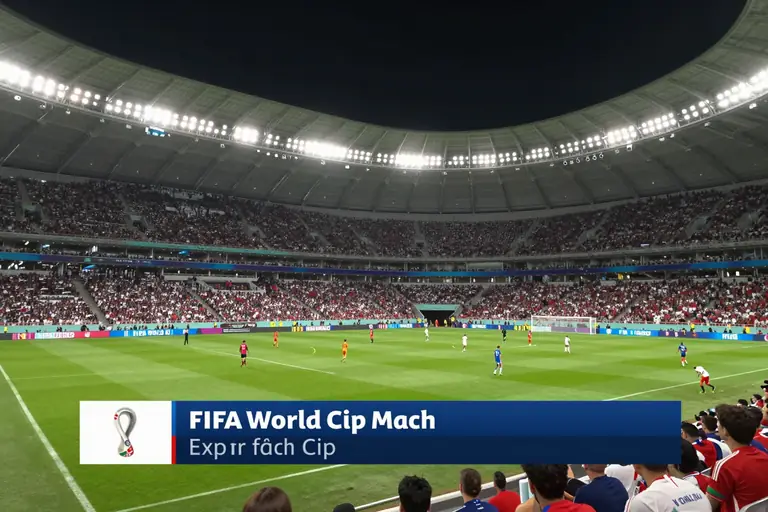

Welcome to our comprehensive guide on FIFA World Cup possible lineups and match predictions. The World Cup is the pinnacle of international football, where tactical brilliance, individual genius, and team cohesion converge. Understanding how teams might line up on the pitch is paramount, as it directly influences game strategy, potential outcomes, and the narrative of each match. Our goal is to provide insightful analysis, breaking down the complexities of team selection and offering informed predictions.
We delve deep into factors shaping a coach’s decisions, from player fitness and recent form to tactical matchups and historical performance. By dissecting these elements, we offer a clearer picture of what to expect. Whether you’re a seasoned football enthusiast or a casual observer, our analysis is designed to give you a reliable edge in anticipating the drama and excitement of the FIFA World Cup.
Key Factors Influencing Team Selection
In the high-stakes environment of World Cup matches, a coach’s selection of the starting eleven is critical, influenced by a myriad of factors. It’s a delicate balancing act, often requiring difficult choices between established stars and in-form newcomers. The ultimate aim is always to field the strongest possible team best suited to execute the game plan against a specific opponent.
Player Fitness and Availability
The physical demands of a World Cup are immense. Maintaining peak physical condition throughout the tournament is a monumental challenge, and injuries or suspensions can force coaches to drastically alter plans. We diligently track the latest news regarding player health, recovery timelines, and potential suspensions, as the absence of a key player can significantly impact a team’s strength and tactical flexibility. Keeping an eye on the Latest FIFA World Cup Team Announcements is crucial for real-time updates.
Recent Form and Performance
A player’s recent performances, whether in warm-up matches, domestic league fixtures, or previous World Cup games, heavily influence a coach’s decision. A striker consistently scoring is more likely to earn a starting berth than one enduring a goal drought. Similarly, resilient defenders demonstrating tactical discipline tend to be favored. We meticulously evaluate individual player form alongside overall team performance to assess their readiness for the immense pressure of the World Cup stage.
Tactical Considerations and Opponent Analysis
Modern football is as much about strategy as it is about skill. Coaches dedicate countless hours to analyzing opponents, dissecting their strengths, weaknesses, and preferred playing styles. This in-depth analysis dictates the tactical setup, which, in turn, profoundly influences player selection. For instance, facing a fast-paced, counter-attacking side might lead to opting for a more defensive-minded midfield or quicker full-backs. Conversely, against a deep-sitting opponent, a coach might prioritize creative midfielders and agile forwards. The strategic battle often begins long before kickoff, with these pivotal lineup choices setting the tone for the entire match.
Predicting Match Outcomes: Our Approach
Predicting the outcome of a FIFA World Cup match is challenging, given football’s unpredictable nature. However, our predictions are based on a rigorous, thorough examination of all available data, combined with expert analysis and a deep understanding of the sport. We look beyond mere statistics to grasp the nuanced dynamics of each team and the specific context of every encounter.
Historical Head-to-Head Records
While not always the sole determining factor, past encounters can offer valuable insights into potential psychological advantages, recurring tactical patterns, or specific player matchups. Some teams simply seem to have a mental edge or a tactical blueprint that consistently troubles certain opponents. These historical trends can play a significant, albeit subtle, role in a high-stakes World Cup match.
Team Cohesion and Chemistry
A squad brimming with individual star players does not automatically guarantee success. Team cohesion, the intuitive understanding between players, and a shared tactical vision are often far more critical. Teams that have played together frequently, or those with a strong, established core of players, tend to perform exceptionally well under pressure. We carefully assess how well a squad functions as a unified entity, recognizing that collective strength often trumps individual brilliance in tournament football.
Managerial Philosophy and Game Plan
The manager’s philosophy serves as the blueprint for the team’s entire style of play, dictating everything from formation to pressing intensity. Some managers are renowned for attacking football, emphasizing possession and creativity, while others prioritize defensive solidity and counter-attacking prowess. Understanding a manager’s typical approach helps us anticipate how they might set up their team and which players would best execute that specific game plan. A truly flexible manager, capable of adapting tactics mid-game, often holds a significant advantage.
Possible Lineup Scenarios for Top Contenders
Let’s consider how some perennial favorites might line up. These examples illustrate the tactical considerations for elite teams.
For instance, Brazil, renowned for attacking flair, might lean towards an expansive 4-3-3 formation to maximize offensive potential. A possible lineup: Alisson Becker; Danilo, Marquinhos, Eder Militao, Alex Sandro; Casemiro, Bruno Guimarães, Lucas Paquetá; Raphinha, Richarlison, Vinicius Jr. This configuration allows a solid defensive base while unleashing formidable offensive capabilities.
Conversely, a European powerhouse like France, characterized by a robust midfield and clinical finishing, might opt for a balanced 4-2-3-1 system. Their potential lineup: Mike Maignan; Jules Kounde, Raphaël Varane, Dayot Upamecano, Theo Hernandez; Aurélien Tchouaméni, Adrien Rabiot; Ousmane Dembélé, Antoine Griezmann, Kylian Mbappé; Olivier Giroud. This setup enables midfield control, leverages blistering pace, and exploits counter-attacking opportunities.
These are illustrative examples. Coaches are masters of adaptation, making last-minute adjustments based on training, injuries, or tactical requirements. Our predictions account for these common tactical preferences and how they might be modified to counter specific opponents.
Match Predictions: What to Look For
When we issue a match prediction, our analysis extends far beyond naming a potential winner. We meticulously consider the anticipated flow of the game, highlighting key player matchups and identifying potential turning points. Will one team dominate possession, or will they adopt a pragmatic, counter-attacking approach? Which individual battles – in midfield, defense, or attack – could ultimately determine the outcome?
For instance, a fixture between two defensively solid teams might suggest a low-scoring affair. Conversely, a clash involving two highly attack-minded teams could evolve into an open, end-to-end spectacle with multiple goals. We also factor in the “x-factor” – individual brilliance, a controversial referee decision, or an unexpected tactical substitution that can dramatically alter the game. While we strive to provide the most informed predictions, football’s inherent unpredictability is precisely what makes it the world’s most beloved sport. The beauty lies in the unexpected, captivating millions of fans globally with every World Cup moment.
FAQ
How accurate are FIFA World Cup lineup predictions?
Our lineup predictions are based on extensive analysis of team news, player form, tactical trends, and historical data, offering a highly informed estimate. However, final decisions rest with coaches, who may make last-minute changes due to various factors. Therefore, they represent probabilities and possibilities rather than absolute guarantees.
What factors are most important for predicting match outcomes?
Key factors include recent team form, player availability (injuries, suspensions, fitness), historical head-to-head records, specific tactical matchups, and overall squad quality, depth, and cohesion.
Do historical results influence current World Cup predictions?
Yes, historical results and head-to-head records provide valuable context, offering insights into potential psychological advantages or recurring tactical patterns. While current form often carries more weight, historical data informs a more comprehensive prediction.
Where can I find the latest team news and player updates?
You can typically find the most up-to-date team news, injury updates, squad announcements, and player status reports on official FIFA and national football association websites, reputable international sports news outlets, and through our dedicated coverage and analysis provided on this site.