
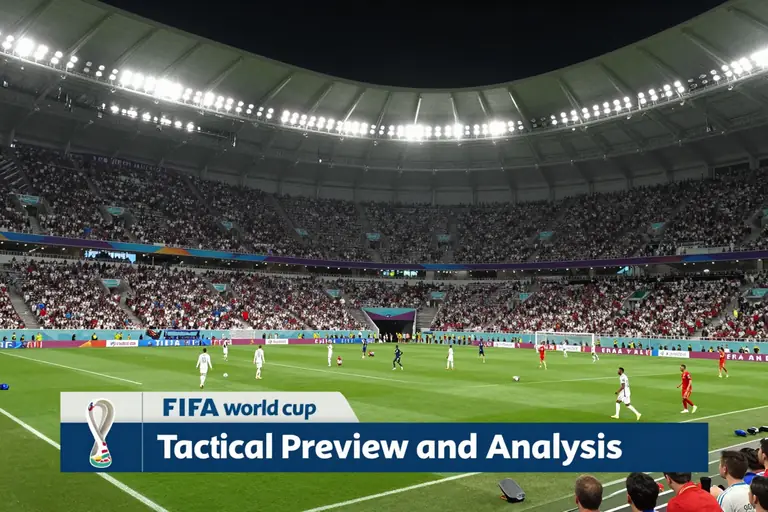
Unpacking the Tactical Chessboard: FIFA World Cup Preview
The FIFA World Cup isn’t just about star players and dramatic goals; it’s a grand tactical battleground where coaches meticulously plan every move. As the tournament approaches, we’re diving deep into a comprehensive FIFA World Cup Tactical Preview and Analysis to understand what we can expect to see on the pitch. This isn’t merely about who will win, but how they might try to achieve it, focusing on the strategic approaches that could define the competition.
Every national team brings its own footballing philosophy, often refined over years. Some will prioritize suffocating defense and quick counter-attacks, while others will aim for possession-based dominance and intricate passing patterns. Understanding these underlying tactical blueprints gives us a richer appreciation for the beautiful game, and helps us anticipate the ebb and flow of matches.
Evolving Formations and Their Impact
Modern football is dynamic, and formations are no longer rigid structures. While the classic 4-3-3, 4-2-3-1, and 3-5-2 remain prevalent, their interpretations vary widely. We expect to see a continuation of flexible systems, where players are encouraged to interchange positions and adapt to different phases of play.
- The 4-3-3: This formation, often favored by teams with strong attacking wide players, allows for both width and central penetration. The key lies in the midfield trio – one holding midfielder providing cover, and two box-to-box types linking defense and attack. Its success depends heavily on the full-backs’ ability to push high and contribute to the attack, effectively creating a 2-3-5 in possession.
- The 4-2-3-1: A common sight in recent years, this system emphasizes a strong double pivot in midfield, offering defensive solidity. The attacking midfielder (the ‘number 10’) becomes the creative hub, tasked with unlocking defenses and linking with the lone striker. Teams employing this often look to exploit half-spaces and quick transitions.
- The 3-4-3/3-5-2: These three-at-the-back systems are gaining traction, especially for teams looking to control the midfield or overpower opponents in wide areas with wing-backs. The central defenders need to be comfortable on the ball, and the wing-backs are crucial for providing both defensive cover and attacking impetus. This formation can be particularly effective against teams that struggle to break down a compact defense.
The tactical fluidity means that a team might start in a 4-3-3 but transition into a 3-4-3 during attacking phases, or drop into a 5-3-2 when defending deep. It’s this adaptability that separates good teams from great ones.
Pressing Schemes and Defensive Strategies
High pressing has become a hallmark of many top teams, aiming to win the ball back high up the pitch and launch immediate attacks. We anticipate seeing various pressing traps and triggers. Some teams will employ a coordinated team press, while others might focus on individual pressing from key players.
Conversely, defensive solidity remains paramount. Teams will likely alternate between a high block, attempting to push opponents back, and a low block, sitting deep to deny space in dangerous areas. The art of defending now involves not just individual tackles but also coordinated movements, cutting off passing lanes, and forcing opponents into predictable areas.
Expect to see teams like Argentina and Brazil, with their blend of individual brilliance and collective discipline, to employ sophisticated defensive transitions, quickly turning defense into attack. European powerhouses often focus on structured pressing and positional play.
Player Roles and Key Individuals
Beyond formations, specific player roles will be critical. The modern defensive midfielder is often more than just a ball winner; they are the deep-lying playmaker, dictating tempo and initiating attacks. Creative wingers who can cut inside or beat their man on the outside will be vital for breaking down stubborn defenses.
The role of the false nine, though less common than a traditional striker, might still appear, especially from teams looking to create numerical superiority in midfield or disrupt central defenders. Strikers, whether target men or poachers, will need to be clinical, as chances can be at a premium in high-stakes matches.
Keep an eye on players who can operate effectively in multiple positions or roles. Their versatility offers coaches valuable tactical flexibility, allowing for in-game adjustments that can turn the tide of a match. For the latest updates and insights on key players and team developments, you can always check our section on Breaking FIFA World Cup News This Week.
Anticipated Tactical Trends
Based on recent international tournaments and club football, several tactical trends are likely to feature prominently in our FIFA World Cup Tactical Preview and Analysis:
- Increased Use of Data and Analytics: Coaches will rely heavily on performance data to inform decisions, from player selection to in-game substitutions.
- Set-Piece Specialization: Corners and free-kicks are often match-winners. Teams will have elaborate routines designed to exploit opponent weaknesses.
- Mental Fortitude and Game Management: The ability to control emotions, adapt to setbacks, and manage the clock will be crucial, especially in knockout stages.
- Impact of Substitutes: With five substitutions allowed, coaches have more power to influence games from the bench, introducing fresh legs or tactical changes.
Ultimately, the World Cup is a stage for both individual brilliance and collective tactical execution. The teams that can best balance these elements, adapting their strategies to different opponents and match situations, are the ones most likely to lift the coveted trophy.
FAQ
What is the most common formation expected in the World Cup?
The 4-3-3 and 4-2-3-1 are expected to be very common, as they offer a good balance between defensive stability and attacking options, allowing for fluid transitions.
How important are set pieces in modern World Cup tactics?
Set pieces are extremely important. With many games decided by fine margins, well-drilled free-kick and corner routines can be crucial for scoring goals or creating dangerous opportunities.
Will we see any new tactical innovations at the tournament?
While fundamental formations remain, coaches often introduce subtle variations or specific player roles that can be considered innovations, especially in how they press or transition between defense and attack. Expect refined approaches rather than entirely new systems.
How does the five-substitute rule affect tactical planning?
The five-substitute rule significantly impacts tactical planning by allowing coaches more flexibility to introduce fresh legs, change formations, or bring on specialist players to address specific in-game situations, enhancing their ability to influence a match.