
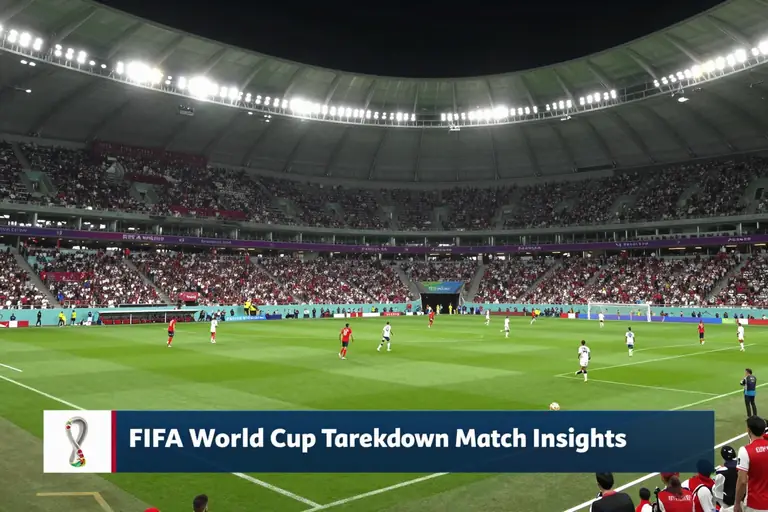
Unpacking the Strategic Brilliance of the FIFA World Cup
The FIFA World Cup isn’t just a spectacle of athletic prowess; it’s a grand chessboard where the world’s best football minds battle with strategies, formations, and individual brilliance. Every four years, we witness a global masterclass in football tactics, where coaches meticulously plan and players execute with precision. Understanding the intricate details of a tactical breakdown and match insights can elevate your appreciation for the beautiful game, moving beyond just the scoreline to the ‘why’ and ‘how’ of each pivotal moment. This comprehensive analysis provides a rich FIFA World Cup Tactical Breakdown.
From the high-pressing intensity of modern European powerhouses to the fluid, counter-attacking styles often favored by South American giants, the tournament showcases a diverse array of football philosophies. This diversity is what makes a comprehensive tactical breakdown and match insights so fascinating. It allows us to see how different cultures and footballing traditions clash and sometimes, surprisingly, converge on the pitch, offering valuable FIFA World Cup Tactical Breakdown.
The Evolution of World Cup Tactics: A Historical Perspective
Football tactics are constantly evolving, and the FIFA World Cup has often been the crucible for these transformations. Think back to the pioneering 4-2-4 of Brazil in 1958, which revolutionized attacking play, or the Catenaccio system that brought Italy success. Each era brings new innovations, new interpretations of existing systems, and new challenges for opposing teams to overcome. A deep dive into a FIFA World Cup Tactical Breakdown often reveals these historical threads woven into contemporary strategies.
In recent decades, we’ve seen a shift towards more flexible systems, where players are expected to be adept in multiple roles. The rigid positions of yesteryear have given way to dynamic, interchangeable roles, especially in midfield and attack. This fluidity makes a tactical breakdown and match insights even more complex and intriguing, as systems can change mid-game based on the flow of play or an opponent’s adjustment. Such adaptability is crucial for a successful FIFA World Cup Tactical Breakdown.
Key Tactical Trends in Recent Tournaments
What are the prevailing tactical trends we’ve observed in the most recent FIFA World Cup tournaments? High-intensity pressing, often referred to as Gegenpressing, has become a cornerstone for many successful teams. This involves immediately hunting the ball back after losing possession, aiming to win it high up the pitch and launch new attacks. It demands exceptional physical conditioning and tactical discipline from every player.
Another significant trend is the rise of the inverted full-back, a player who drifts into central midfield when their team has possession, adding an extra dimension to build-up play and creating numerical advantages. This challenges traditional defensive structures and requires a nuanced tactical breakdown to fully appreciate its impact. The use of advanced analytics also plays a crucial role, informing everything from player selection to in-game adjustments, providing a data-driven layer to the match insights, all part of a thorough FIFA World Cup Tactical Breakdown.
Defensive Masterclasses and Attacking Brilliance
A balanced team needs both a robust defense and a potent attack. Some teams prioritize defensive solidity, aiming to frustrate opponents and capitalize on minimal chances. Others, like the free-flowing attacking sides, seek to overwhelm with creativity and sheer goal-scoring power. The beauty of the FIFA World Cup Tactical Breakdown and Match Insights lies in dissecting how these opposing philosophies collide.
Consider the disciplined defensive blocks employed by teams looking to upset a favorite. They might utilize a low block, packing their own penalty area and forcing the opponent to break them down. On the attacking front, we often see intricate passing movements, individual dribbling brilliance, and clever off-the-ball runs designed to create space and scoring opportunities. Understanding these elements is central to any tactical breakdown discussion, particularly for a FIFA World Cup Tactical Breakdown.
The Role of Formations and Their Adaptability
While formations like 4-3-3, 4-2-3-1, or 3-5-2 provide a starting point, modern football is far more dynamic. A team might start in a 4-3-3 but transition into a 4-5-1 in defense, or a 3-4-3 in attack. This tactical flexibility is a hallmark of successful World Cup teams. Coaches spend countless hours drilling these transitions, ensuring players understand their roles in different phases of play.
Analyzing these subtle shifts is a key component of a thorough tactical breakdown and match insights. It’s not just about what formation is listed on the team sheet, but how it morphs and adapts throughout the 90 minutes. Injuries, red cards, or simply the opponent’s strategy can force a team to change its shape and approach, demanding tactical ingenuity from the coaching staff, which is vital for any FIFA World Cup Tactical Breakdown.
Individual Brilliance within Collective Systems
Even the most meticulously planned tactical systems rely on individual moments of genius. A world-class player can unlock a stubborn defense with a single pass, a dazzling dribble, or a thunderous shot. These moments are often the difference between victory and defeat in tight World Cup matches. A comprehensive FIFA World Cup Tactical Breakdown must acknowledge the interplay between collective strategy and individual talent.
Think of Lionel Messi’s ability to single-handedly change the tempo of a game, or Kylian Mbappé’s electrifying pace. While they operate within a team’s framework, their unique abilities often transcend the tactical blueprint. Coaches build systems that allow these star players to flourish, giving them the freedom to express themselves while ensuring defensive solidity. This balance is critical for any team hoping to lift the trophy, a core aspect of FIFA World Cup Tactical Breakdown.
Match Analysis: Deep Dive into Key Encounters
To truly grasp the essence of a tactical breakdown and match insights, one must look at specific games. Consider a hypothetical knockout stage match where two tactical giants clash. One team might employ a high defensive line to compress the space, while the other aims to exploit that space with long balls over the top to fast attackers. The battle in midfield, where possession is contested and transitions are initiated, becomes paramount.
Analyzing substitutions is also vital. A well-timed substitution can change the momentum of a game, introduce fresh legs, or alter the tactical setup to counter an opponent’s strength. Conversely, a poor substitution can disrupt a team’s rhythm and lead to its downfall. These micro-battles and decisions form the rich tapestry of a FIFA World Cup Tactical Breakdown and Match Insights.
The Psychological Dimension of World Cup Football
Beyond formations and player roles, the psychological aspect plays a massive role in the FIFA World Cup. The pressure of performing on the global stage, the weight of national expectations, and the intensity of knockout football can affect even the most experienced players. Mental resilience, composure under pressure, and the ability to bounce back from setbacks are as crucial as any tactical plan.
A team’s mentality can influence its tactical execution. A confident team might press higher and take more risks, while a nervous one might sit deeper and play more conservatively. Coaches are not just tacticians; they are also motivators and psychologists, tasked with ensuring their players are mentally prepared for the challenges ahead. This human element is an often-underestimated part of a comprehensive tactical breakdown and match insights, enriching the FIFA World Cup Tactical Breakdown.
Preparing for the Next Big Match: What to Look For
As fans, understanding the nuances of a FIFA World Cup Tactical Breakdown and Match Insights allows us to watch games with a more informed perspective. Before the next big match, consider these points:
- Formations and Expected Lineups: How do the teams typically set up? Are there any surprises?
- Key Player Matchups: Who will be tasked with marking the opposition’s star player? Which individual battles could be decisive?
- Strengths and Weaknesses: What are each team’s primary attacking threats? Where are they vulnerable defensively?
- Pressing Schemes: Do they press high or sit deep? How will they try to win the ball back?
- Set-Piece Strategies: Corners and free-kicks can often decide tight games. What are their routines?
- Midfield Battle: Which team is likely to dominate possession and control the tempo?
By considering these factors, you’ll be better equipped to appreciate the strategic depth of each game. For those looking to delve even deeper into potential outcomes, a FIFA World Cup Prediction for Today’s Match can offer additional perspectives, blending data with tactical understanding, enhancing your FIFA World Cup Tactical Breakdown.
The Art of In-Game Adjustments
The best coaches are those who can read the game and make effective in-game adjustments. This might involve changing a formation, tweaking a player’s role, or making a substitution to counter an opponent’s move. These tactical chess moves often determine the outcome of a match. A detailed tactical breakdown and match insights will always highlight these critical moments where a coach’s decision directly impacted the flow and result of the game, providing a deeper FIFA World Cup Tactical Breakdown.
Sometimes, a simple instruction from the touchline can spark a turnaround. Other times, a more drastic change is needed. The ability to adapt under pressure, often with limited time, is a testament to a coach’s skill. This aspect of the game makes every FIFA World Cup Tactical Breakdown unique and endlessly fascinating.
Why Understanding Tactics Enhances the Fan Experience
For many, football is simply about cheering for their team and enjoying the goals. And there’s nothing wrong with that! However, for those who seek a deeper connection to the sport, understanding the FIFA World Cup Tactical Breakdown and Match Insights provides an entirely new layer of enjoyment. It allows you to appreciate the intelligence behind the beautiful game, to see the patterns, and to anticipate the moves.
It’s like watching a chess grandmaster at work; the superficial observer sees pieces moving, but the connoisseur understands the intricate strategy unfolding. Similarly, with a solid FIFA World Cup Tactical Breakdown and Match Insights, you’ll start to see the game not just as a series of events, but as a carefully orchestrated battle of wits and skill. This heightened awareness makes every match, every pass, and every tackle more meaningful. The FIFA World Cup Tactical Breakdown is truly a guide to the heart of football strategy.
The journey through the FIFA World Cup is always filled with surprises, upsets, and moments of sheer brilliance. By focusing on the FIFA World Cup Tactical Breakdown and Match Insights, we gain a richer understanding of what makes this tournament the pinnacle of international football. It’s not just about who wins, but how they win, and the strategic paths they forge to glory.
Every match offers a fresh opportunity for a FIFA World Cup Tactical Breakdown and Match Insights. From the group stages to the final, each game presents unique challenges and showcases different tactical approaches. This constant evolution is what keeps fans coming back, eager to witness the next strategic masterpiece on the pitch.
FAQ
Q1: What is the most common formation used in modern FIFA World Cup tournaments?
While there’s no single “most common” formation due to tactical flexibility, the 4-3-3 and 4-2-3-1 remain highly popular. These formations offer a good balance between defense and attack, allowing for strong pressing, wide play, and central midfield dominance. However, many teams adapt these shapes significantly during different phases of play, a key aspect of FIFA World Cup Tactical Breakdown.
Q2: How important is individual player skill compared to team tactics in the FIFA World Cup?
Both are incredibly important and interdependent. Even the best tactical system relies on players executing their roles effectively, and individual brilliance can often unlock a game when tactics reach a stalemate. World Cup-winning teams typically possess a strong tactical framework that maximizes the impact of their star players, allowing individual skill to flourish within a collective strategy, as revealed in any FIFA World Cup Tactical Breakdown.
Q3: What role does data analytics play in a FIFA World Cup Tactical Breakdown and Match Insights?
Data analytics plays a crucial role in modern football, informing almost every aspect of a team’s preparation and in-game decisions. Coaches use data to analyze opponent strengths and weaknesses, track player performance, identify tactical patterns, and even predict potential outcomes. This data-driven approach enhances the depth and precision of any tactical breakdown and match insights, making a FIFA World Cup Tactical Breakdown more informed.