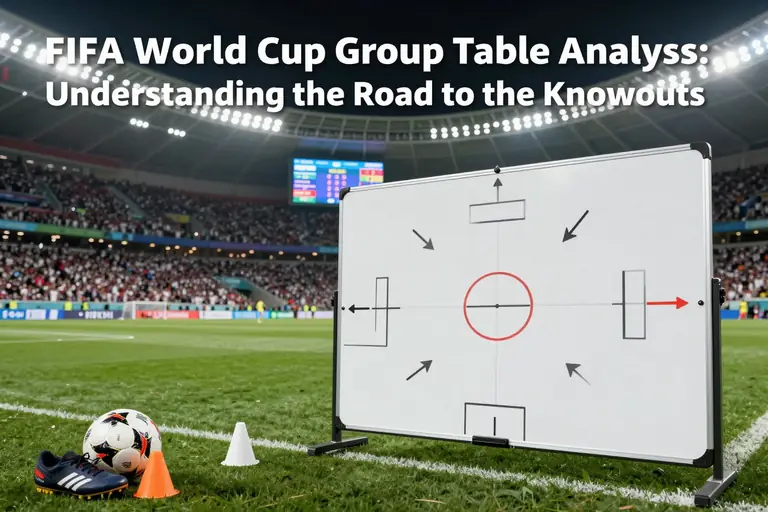
When the FIFA World Cup kicks off, one of the first things fans look at is the group table. This isn’t just a simple list of teams and points; it’s a dynamic representation of each nation’s journey through the initial phase of the tournament. Our FIFA World Cup Group Table Analysis provides a comprehensive look at how these tables work, what to watch out for, and how teams navigate their way to the knockout stages. We’ll cover everything from points accumulation to crucial tie-breaking rules, helping you understand the nuances of group stage progression.
Understanding FIFA World Cup Group Table Analysis
The group stage of the FIFA World Cup is where the initial battles are fought, determining which teams have earned the right to continue their quest for glory. A thorough analysis of the group table goes beyond merely checking points; it involves understanding the implications of goal difference, head-to-head records, and even fair play points. This section delves into the fundamental aspects of group table analysis, explaining why certain results are more impactful than others and how teams strategically approach their three group matches.
Competition Format: The Group Stage Explained
The FIFA World Cup begins with 32 teams (soon to be 48) divided into eight groups of four. Each team plays every other team in their group once, resulting in three matches per team. Points are awarded as follows: three points for a win, one point for a draw, and zero points for a loss. The primary goal for every team is to finish in the top two positions within their group to qualify for the knockout stage. This initial phase sets the tone for the entire tournament, as strong group performances can lead to more favorable matchups later on.
Decoding the Standings: Tie-Breaking Rules
Simply accumulating points isn’t always enough to determine who advances, especially when teams finish with the same number of points. This is where tie-breaking rules become critical, often leading to nail-biting finishes on the final matchday. Here’s the hierarchy of criteria used by FIFA to separate teams:
- Goal Difference: The first and most common tie-breaker is superior goal difference in all group matches. This is calculated by subtracting the number of goals conceded from the number of goals scored. A higher positive difference is better.
- Goals Scored: If teams are still level on goal difference, the team that has scored the greater number of goals in all group matches takes precedence.
- Head-to-Head Points: If the above two criteria don’t separate teams, FIFA then looks at the points obtained in the matches played between the tied teams.
- Head-to-Head Goal Difference: Should teams still be tied, goal difference in the matches played between the tied teams is considered.
- Head-to-Head Goals Scored: If they remain inseparable, the number of goals scored in the matches played between the tied teams is the next factor.
- Fair Play Points: This is a less common tie-breaker but can be decisive. It involves points deducted for yellow and red cards accumulated during the group stage. Each yellow card is -1 point, indirect red card (two yellow cards) is -3 points, direct red card is -4 points, and a yellow card followed by a direct red card is -5 points. The team with the highest number of fair play points (i.e., fewest deductions) ranks higher.
- Drawing of Lots: In the extremely rare event that all the above criteria still cannot separate two or more teams, a drawing of lots will be conducted by FIFA.
Understanding these rules is crucial for any serious fan following the tournament, as they often dictate which teams progress and which are sent home.
Team Analysis: Factors Influencing Group Performance
Several factors contribute to a team’s performance in the group stage. It’s not just about individual player talent, but also about how the team functions as a unit under pressure.
Squad Depth and Fitness
A long tournament like the World Cup demands excellent squad depth. Players can pick up injuries or fatigue, especially with matches coming thick and fast. Teams with strong benches can rotate players, keeping everyone fresh and ready for the challenges ahead. Fitness levels are paramount, particularly in the later stages of the group matches where teams might be playing their third game in a short span.
Tactical Approach and Adaptability
Coaches play a massive role in shaping a team’s group stage destiny. Their tactical approach against different opponents, and their ability to adapt mid-game or between matches, can be the difference between qualification and early exit. Some teams might prioritize defensive solidity, aiming for draws against stronger opponents, while others might go all out for goals to boost their goal difference.
Historical Context and Tournament Experience
Teams with a rich World Cup history or players with significant tournament experience often handle the pressure better. Knowing how to navigate the group stage, manage expectations, and perform in high-stakes environments can give seasoned teams an edge over debutants or less experienced sides. This historical context sometimes provides insights into how certain nations tend to perform under specific conditions.
Key Matches and Their Impact
Every match in the group stage is important, but some carry more weight than others. The opening match of a group can set the tone, providing an early boost in confidence or highlighting areas of concern. Matches between the two strongest teams in a group often decide who finishes first, which can be crucial for a more favorable draw in the round of 16. Likewise, the final matchday often features “do-or-die” scenarios where teams need specific results to advance. These are the games that generate the most drama and excitement.
A thorough FIFA World Cup Group Table Analysis will always highlight these pivotal encounters. For instance, if two strong teams draw their opening match, their subsequent games against the weaker teams become even more important to secure maximum points and improve goal difference. Conversely, an upset in an early game can throw the entire group wide open, creating unexpected paths to qualification.
Looking Ahead: The Knockout Round Implications
The way a team performs in the group stage directly impacts their path in the knockout rounds. Finishing first in a group usually means facing a second-place team from another group, which is generally perceived as an easier draw. Finishing second, however, often pits a team against a group winner, potentially leading to a much tougher opponent. This strategic consideration means teams often fight not just for qualification, but for the top spot. Our site often provides a detailed FIFA World Cup Knockout Round Analysis, showing how these group stage outcomes ripple through the rest of the competition. Understanding this progression is key to appreciating the strategic depth of the tournament.
Practical Tips for Following the Group Stage
For fans, keeping track of the group tables can be an exciting part of the World Cup experience. Here are a few practical tips:
- Stay Updated: Regularly check official sources or reputable sports news sites for the latest standings and results.
- Understand the Rules: Familiarize yourself with the tie-breaking criteria mentioned earlier. Knowing these can help you predict outcomes even when points are tied.
- Watch Key Matches: Prioritize watching matches involving teams that are closely contested in the standings, especially on the final matchday.
- Consider Goal Difference: Don’t just look at points; goal difference can be a huge factor, so pay attention to how many goals teams are scoring and conceding.
FAQ
How many teams advance from each group in the FIFA World Cup?
Two teams from each group advance to the knockout stage. These are typically the top two teams based on points, then tie-breaking criteria.
What happens if two teams have the same points and goal difference?
If two teams have the same points and goal difference, the next tie-breaker is the number of goals scored in all group matches.
Is head-to-head record more important than goal difference in the group stage?
No, goal difference in all group matches is typically the first tie-breaker. Head-to-head records only come into play if goal difference and goals scored are also identical.
What are “Fair Play Points” in the World Cup?
Fair Play Points are a tie-breaking criterion based on the disciplinary record of a team during the group stage, with points deducted for yellow and red cards. The team with fewer disciplinary points ranks higher.
Why is finishing first in a group important?
Finishing first in a group is important because it generally leads to a more favorable draw in the Round of 16, as you would typically face a second-place team from another group.