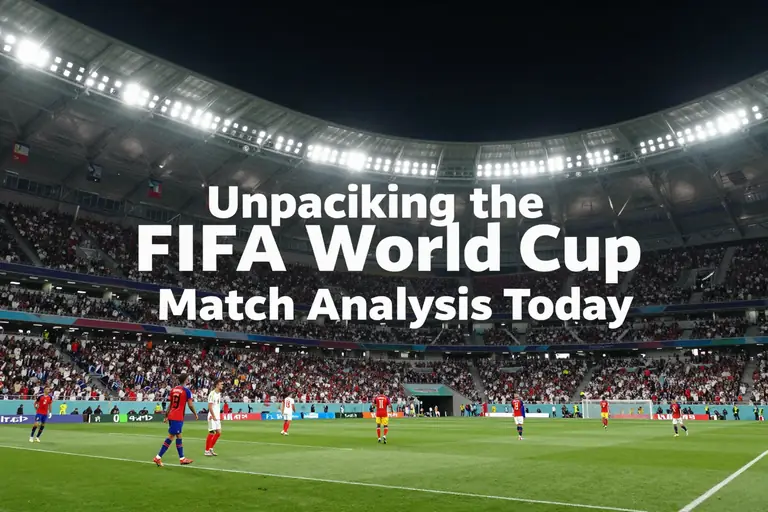
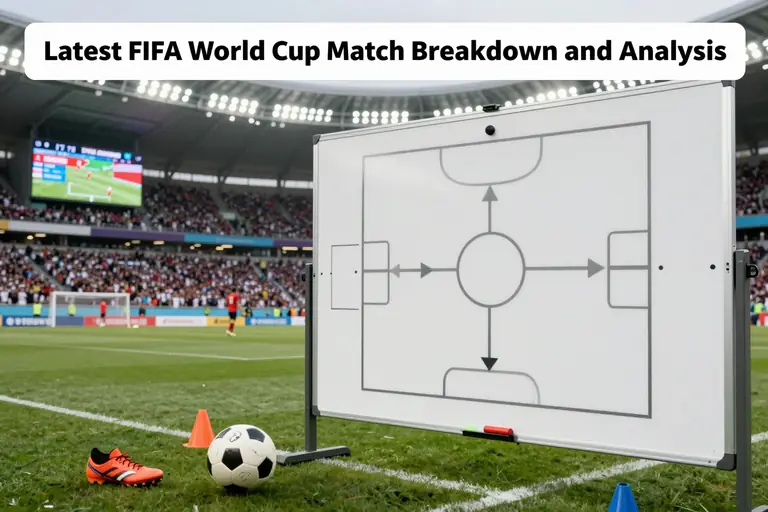
Welcome to our comprehensive coverage of the beautiful game! On our site, we always aim to bring you the most current and insightful analyses, and today, we’re diving deep into the Latest FIFA World Cup Match Breakdown. We understand you’re looking for quick answers and reliable information, so let’s cut straight to the chase: the recent fixtures have delivered some truly unexpected turns, dramatically shifting the landscape for several key contenders. Our coverage will help you understand the tactical battles, individual brilliance, and potential implications for the knockout stages.
Current Situation: The Group Stage Heats Up
The FIFA World Cup group stage is always a pressure cooker, and this year is no exception. We’ve seen titans stumble and underdogs rise, making every single point crucial. Teams are now past their opening fixtures, and the second round of group matches has truly separated the contenders from those facing an early exit. The atmosphere in the stadiums, even through our screens, has been electric, fueled by passionate fans and high-stakes football. As we move closer to the knockout rounds, the tactical approaches are becoming more defined, and the players are starting to hit their stride.
The race for qualification is incredibly tight in several groups. What makes this World Cup particularly fascinating is the blend of established footballing nations and emerging talents. We’re observing teams adapting their strategies on the fly, responding to early results and injuries. This dynamic environment means that every subsequent match carries immense weight, not just for the teams involved, but for the entire tournament narrative.
Recent Results: Shockers and Stalemates
Let’s take a look at some of the most impactful recent results that have shaped the tournament. The match between Argentina and Poland, for instance, was a masterclass in tactical discipline from the South Americans, securing a crucial 2-0 victory. This result not only propelled them to the top of their group but also showcased Lionel Messi’s continued influence, despite a missed penalty. Their defense, often questioned in previous tournaments, held firm, giving their attacking players the freedom to express themselves.
Another significant outcome was the surprising 1-1 draw between Germany and Spain. This clash of European giants was anticipated to be a high-scoring affair, but both teams demonstrated cautious play. While Spain showed flashes of their signature possession-based football, Germany’s resilience, particularly in the second half, earned them a vital point. This draw leaves both teams with work to do in their final group matches, illustrating the fine margins at this level of competition. The implications of this draw are profound, as it keeps the group wide open, adding extra tension to the final round of games.
Meanwhile, the Asian teams have continued to impress. Japan’s narrow 1-0 win against Costa Rica, following their stunning victory over Germany, has put them in a strong position to advance. Their commitment to a high-pressing game and quick transitions has proven effective against more traditionally dominant sides. These results are not just isolated incidents; they reflect deeper tactical trends and the growing global competitiveness of football.
Team Analysis: Who’s Peaking and Who’s Panicking?
Based on current form, several teams are clearly demonstrating their championship credentials. Brazil, for example, has looked incredibly strong. Their blend of individual brilliance and cohesive teamwork has been a joy to watch, with Richarlison leading the line effectively. Their defense has been solid, and their midfield controls the tempo of games with ease. They appear to be peaking at the right time, building momentum with each victory.
France, the reigning champions, also appear to be in excellent shape. Kylian Mbappé’s electrifying pace and clinical finishing make them a constant threat. Despite some early injury concerns, their squad depth has shone through, allowing them to maintain a high level of performance. Their ability to switch between patient build-up and devastating counter-attacks makes them incredibly difficult to defend against.
On the other hand, some traditional powerhouses are struggling to find their rhythm. England, while securing points, has sometimes looked unconvincing. They show moments of brilliance but lack consistency over 90 minutes. Their midfield structure, in particular, has faced scrutiny, often appearing disjointed. For them to go deep in the tournament, they’ll need to address these issues quickly and find a more fluid attacking pattern.
Belgium, another team with high expectations, has also had a rocky start. Their ‘golden generation’ seems to be waning, and their performances have lacked the dynamism we’ve come to expect. Poor finishing and defensive lapses have cost them valuable points. The pressure is mounting on their coach and key players to deliver in their final group fixture, or face an unexpectedly early exit from the competition. Their inability to convert chances has been a recurring theme, and it is a major concern.
Player Watch: Standout Performers and Key Absences
Every World Cup produces its share of heroes, and this tournament is no different. Beyond the established names, we’ve seen some incredible individual performances. Young talents like Jude Bellingham for England have truly announced themselves on the global stage, showcasing maturity beyond their years in midfield. His energy, tackling, and passing range have been instrumental for his team.
Cody Gakpo of the Netherlands has also been a revelation, consistently finding the back of the net and providing crucial assists. His versatility and composure in front of goal make him a player to watch as the tournament progresses. These emerging stars are not just contributing; they are often dictating the flow of games, proving that youth and fearlessness can be just as impactful as experience.
Unfortunately, injuries are also a part of the game. Key players like Neymar, though expected to return, have missed crucial matches, impacting their team’s immediate strategies. The absence of such influential figures forces coaches to adapt and rely on squad depth, which can sometimes be a test of a team’s true strength. We track these developments closely on our site, as they often have significant implications for upcoming fixtures and tactical adjustments.
Tactical Overview: Adapting to the Opposition
The tactical battles in this World Cup have been fascinating. We’re seeing a clear trend towards more flexible formations and adaptive strategies. Many teams are no longer rigidly sticking to one system but are instead tweaking their approach based on the opponent. For instance, the use of a back three has become increasingly popular, offering defensive solidity while allowing wing-backs to push high and provide width in attack.
High pressing remains a dominant tactical choice for many top teams, aimed at disrupting the opponent’s build-up and winning the ball back in dangerous areas. However, teams are also becoming adept at playing through the press, using quick, incisive passes to exploit the space left behind. The evolution of goalkeepers, now often acting as an extra outfield player in possession, is also a significant tactical development.
Counter-attacking football has also proven to be incredibly effective, especially for teams looking to upset stronger opposition. The emphasis is on rapid transitions from defense to attack, exploiting space with pace and precision. This tactical diversity makes for a dynamic and unpredictable tournament, where coaches are constantly trying to outmaneuver each other. Understanding these tactical nuances helps us provide a more complete Latest FIFA World Cup Match Breakdown.
Head-to-Head Records: What History Tells Us
While current form is crucial, historical head-to-head records can sometimes offer interesting insights, particularly in high-stakes knockout matches. For example, when two teams with a long rivalry meet, past encounters can play a psychological role. However, it’s important to remember that football is constantly evolving, and a team from two decades ago bears little resemblance to its modern counterpart.
Nevertheless, historical meetings indicate certain patterns or rivalries that can add an extra layer of intensity to a match. For instance, some nations consistently perform well against specific opponents, regardless of their current form. This isn’t a guarantee of future outcomes, but it certainly adds to the narrative. Our site often delves into these historical contexts to provide a richer understanding of the matchups, helping you appreciate the deeper stories behind the games. This historical perspective is just one piece of the puzzle in our comprehensive Latest FIFA World Cup Match Breakdown.
FAQ
What was the biggest upset in the most recent round of matches?
While there haven’t been many outright upsets in terms of results, Germany’s draw against Spain was a surprising outcome given their recent form and the pressure on them to win.
Which team is currently showing the best form in the tournament?
Brazil appears to be in the strongest form, demonstrating both offensive power and defensive solidity in their recent matches.
Are there any key players injured for the upcoming matches?
Neymar is currently recovering from an ankle injury, and while expected to return, his status for immediate upcoming matches is being closely monitored.
What does the Latest FIFA World Cup Match Breakdown indicate for the knockout stages?
The breakdown indicates that the knockout stages will be highly competitive, with several traditional powerhouses struggling and emerging teams showing great potential, leading to unpredictable matchups.