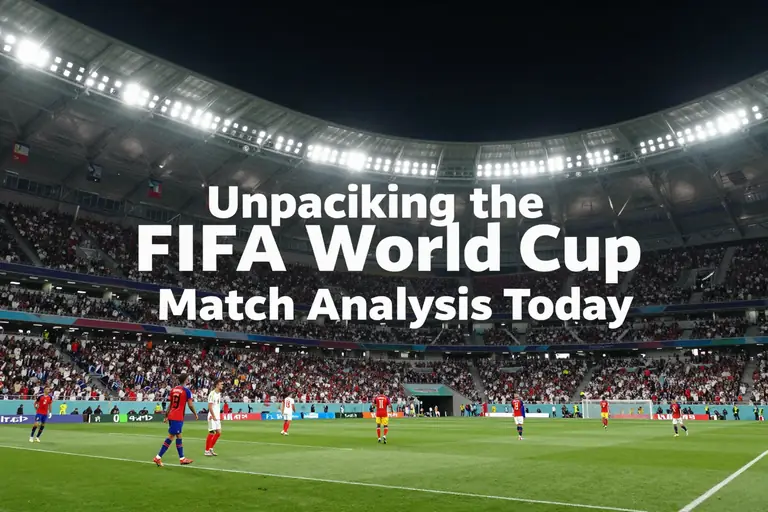

FIFA World Cup Group Stage Analysis Today: What’s Happening?
The FIFA World Cup Group Stage is always a whirlwind of emotions, unexpected upsets, and thrilling performances. As the tournament progresses, every match becomes crucial, shaping the destiny of nations. For fans looking for a quick rundown and deeper insights, our site provides continuous coverage. Today, we’re diving into the latest developments, looking at who’s performing, who’s struggling, and what the immediate future might hold for the teams vying for a spot in the knockout rounds. Our FIFA World Cup Group Stage analysis today focuses on key matches and their implications.
Current Standings: A Snapshot of the Race
The group standings are the clearest indicator of a team’s progress. Points, goal difference, and goals scored are the metrics that determine who advances. A strong start often sets the tone, but late surges are not uncommon. We’ve seen some expected contenders dominate their groups, while others are battling it out in tight races, making for exciting final matchdays.
Here’s a general overview of what we’re observing across the various groups:
- Top Teams Consolidating: Several traditional powerhouses have taken early leads, showcasing their quality and depth. They’re often leveraging their star players to secure comfortable wins.
- Surprise Packages: A few teams have exceeded expectations, either by securing unexpected draws or even wins against higher-ranked opponents. These results often throw a wrench into pre-tournament predictions.
- Tight Contests: Many groups are incredibly close, with multiple teams still in contention for the top two spots. Goal difference could become a critical factor here, pushing teams to seek not just wins, but dominant performances.
Monitoring these standings daily helps us understand the pressure each team faces in their upcoming fixtures.
Team Analysis: Form and Strategy
Delving deeper than just the scores, our FIFA World Cup Group Stage analysis today also examines team form and tactical approaches. Understanding a team’s recent performances, injury concerns, and strategic shifts can offer valuable insights into their potential outcomes.
Key Performers and Emerging Stars
Certain players consistently rise to the occasion in the World Cup. We’ve seen some incredible individual displays, from clinical finishing to impenetrable defending and creative midfield play. These individual moments often turn the tide of a match. Keep an eye on players who are consistently delivering, as their form can be infectious for their teammates.
Tactical Observations
Coaches enter the World Cup with meticulously planned strategies, but the group stage often forces adaptations.
- Defensive Solidity: Teams prioritizing a strong defense and counter-attacking often find success against more attacking sides.
- Attacking Prowess: Sides with multiple creative outlets and strong strikers look to dominate possession and create numerous scoring opportunities.
- Midfield Battles: The control of the midfield often dictates the tempo and flow of the game. Teams that win this battle usually dictate play.
Observing how teams adjust their tactics based on their opponents and the evolving group standings is fascinating. A team might start defensively but switch to a more aggressive approach if they need goals on the final matchday.
Upcoming Fixtures: What to Watch For
The group stage schedule is packed, and every match holds significance. When looking at upcoming games, we consider several factors to gauge their potential impact:
- Must-Win Scenarios: Teams sitting on few points or needing a specific result to advance will play with intense urgency. These matches are often the most thrilling.
- Direct Rivals: Games between two teams vying for the same qualification spot are essentially knockout matches before the actual knockout stage. These are usually fiercely contested.
- Potential Rest for Qualified Teams: If a team has already secured qualification, their final group match might see them rest key players, potentially offering an opportunity for their opponent.
Our coverage keeps you informed on these crucial matchups, highlighting the stakes involved and what each team needs to do to progress.
Predictions and Outlook
Predicting outcomes in football, especially in a tournament as unpredictable as the World Cup, is always a challenge. However, based on current form, tactical analysis, and the pressure of the situation, we can discuss likely scenarios.
For the remaining group stage matches, we anticipate:
- More Upsets: The World Cup is known for unexpected results, and we expect a few more surprises as teams fight for survival.
- Intense Final Matchdays: Many groups will likely go down to the wire, with qualification decided in the last minutes of the final group games.
- Emergence of New Talent: As the tournament progresses, some lesser-known players often step up and make a name for themselves on the world stage.
While we can’t guarantee results, our analysis aims to give you a clearer picture of what to expect as the FIFA World Cup Group Stage unfolds. Enjoy the football!
FAQ
What criteria determine qualification from the group stage?
Teams qualify based on points, then goal difference, goals scored, and head-to-head results if necessary.
How many teams advance from each group?
The top two teams from each of the eight groups advance to the knockout stage, which is the Round of 16.
Are yellow cards carried over to the knockout stage?
Typically, a player who accumulates two yellow cards across two different group stage matches will be suspended for the next match. Yellow cards are usually reset after the quarter-finals.
What happens if teams are tied on points and all other criteria?
If teams remain tied after all standard tie-breakers, a drawing of lots by the FIFA Organizing Committee can be used, though this is a very rare occurrence.
How important is goal difference in the group stage?
Goal difference is the first tie-breaker after points. It can be extremely important, as a strong goal difference often acts as an extra point, encouraging teams to score more goals when possible.