
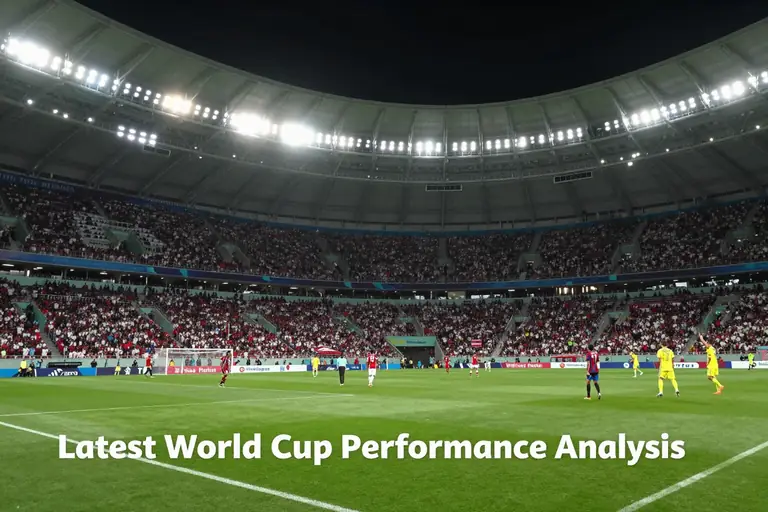
The FIFA World Cup stands as the ultimate spectacle in international football, a grand stage where national teams vie for glory, and individual players etch their names into history. For enthusiasts and expert analysts alike, conducting the latest FIFA World Cup performance analysis offers invaluable insights into the dynamic and ever-evolving landscape of global football. This isn’t merely about identifying the champions; it’s about dissecting the strategies that led to victory, recognizing the innovative tactics that emerged, and celebrating the individual brilliance that captivated millions worldwide. Such an analysis is crucial for understanding current football trends and for anticipating what the future holds for this beautiful game.
Decoding Recent World Cup Trends
Recent FIFA World Cups have provided a rich tapestry of footballing narratives, highlighting significant shifts in team dynamics, tactical approaches, and player capabilities. From the resurgence of traditional powerhouses to the Cinderella stories of underdog nations, each tournament offers a unique set of lessons. A comprehensive latest FIFA World Cup performance analysis helps us to not only appreciate the past but also to forecast potential developments in coaching philosophies, player development, and the overall competitive balance of international football.
Key Performers and Surprising Runs in the Latest FIFA World Cup Performance Analysis
The most recent World Cups have consistently delivered a compelling mix of established footballing giants asserting their dominance and spirited underdogs defying all predictions. Take, for instance, Argentina’s triumphant campaign in 2022. Led by the unparalleled genius of Lionel Messi, they finally secured their long-coveted title, showcasing an extraordinary blend of tactical discipline, collective resilience, and moments of individual brilliance. Their journey was a testament to enduring pressure and the incredibly high stakes inherent in a World Cup.
Conversely, the 2022 tournament also witnessed nations like Morocco embarking on an unforgettable run to the semi-finals. Their success was built on a foundation of defensive solidity, lethal counter-attacking prowess, and an unwavering team spirit that resonated globally. Morocco’s performance captivated audiences, proving that meticulous preparation, strategic execution, and collective belief can indeed overcome substantial odds. These surprising runs are often the most compelling elements of any World Cup, providing valuable insights for any latest FIFA World Cup performance analysis.
Tactical Evolutions on Display in Our Latest FIFA World Cup Performance Analysis
Modern football is a constantly evolving sport, and the World Cup frequently serves as a prime showcase for the very latest tactical innovations. In recent tournaments, we have observed a continued and intensified emphasis on high pressing, fluid formations, and the critical importance of versatile players capable of operating effectively in multiple roles across the pitch. The era of rigid, static formations appears to be receding, replaced by dynamic systems that are designed to adapt to opponents and respond to real-time in-game situations.
For example, the success of many leading teams often hinges on their ability to command the midfield, dictate the pace of play, and expertly exploit spaces created by their adversaries. The effective deployment of wing-backs, who contribute significantly to both defensive duties and offensive surges, has also become a prominent feature. Furthermore, set-pieces continue to be an absolutely crucial element, with numerous matches decided by well-drilled routines from corners and free-kicks. Our latest FIFA World Cup performance analysis strongly suggests that tactical flexibility, coupled with exceptional player adaptability, is more vital than ever for achieving success at the highest level.
Player Watch: Standout Individuals Shaping the Latest FIFA World Cup Performance Analysis
While football is fundamentally a team sport, individual brilliance undeniably illuminates the World Cup stage. Recent tournaments have seen players like Kylian Mbappé electrify audiences with their blistering pace, exceptional skill, and prolific goal-scoring ability. His consistent high-level performances have solidified his status among the world’s elite, demonstrating his capacity to single-handedly alter the trajectory of a match.
Beyond the prolific goalscorers, the impact of visionary playmakers, steadfast defensive anchors, and world-class goalkeepers cannot be overstated. Midfield maestros who possess the ability to unlock entrenched defenses with a single, incisive pass, or defenders who consistently make crucial interceptions and timely tackles, are just as indispensable to a team’s success. The immense pressure of the World Cup often brings out the absolute best in these exceptional individuals, cementing their places in football history and providing rich data for any latest FIFA World Cup performance analysis.
The Pivotal Role of Preparation and Team Cohesion
Achieving success at the FIFA World Cup is not solely about assembling a squad of the most talented players; it is equally about meticulous preparation, fostering strong team cohesion, and implementing effective management strategies. Teams that exhibit a clear and coherent game plan, maintain excellent physical conditioning throughout the tournament, and possess a profound sense of unity often progress further than their individual talent might initially suggest. The psychological dimension of the tournament, encompassing the ability to manage immense pressure and high expectations, is also paramount.
Coaches who can genuinely inspire their teams, execute astute tactical adjustments during critical moments in matches, and expertly manage player fatigue across a demanding schedule are invaluable assets. The capacity to rebound from setbacks, maintain unwavering focus, and perform consistently at the absolute highest level is what ultimately distinguishes the champions from the contenders. This holistic approach is a key component of any comprehensive latest FIFA World Cup performance analysis.
Looking Ahead: What Recent Performances Tell Us About Future World Cups
Based on a thorough latest FIFA World Cup performance analysis, we can confidently anticipate that future World Cups will continue to be intensely competitive, characterized by a persistent emphasis on tactical innovation and the pursuit of individual excellence. The competitive gap between traditional footballing powerhouses and emerging footballing nations appears to be progressively narrowing, which promises even more unpredictable and thrilling tournaments.
The importance of squad depth is also highly likely to increase significantly, given the demanding schedule of matches and the ever-present potential for injuries. Teams possessing a strong bench, capable of making a tangible impact when called upon, will undoubtedly hold a considerable advantage. Our ongoing latest FIFA World Cup performance analysis will continue to meticulously track these evolving trends, providing continuous insights into the beautiful game’s fascinating evolution.
FAQ
What were the main tactical trends observed in the most recent FIFA World Cup?
The most recent World Cup highlighted key tactical trends such as intensified high pressing, dynamic and fluid formations, the critical importance of versatile wing-backs, and highly sophisticated set-piece routines. Tactical flexibility and adaptability proved to be absolutely crucial for the success of leading teams.
Which teams exceeded expectations in the latest World Cup?
Morocco’s remarkable run to the semi-finals in the 2022 World Cup serves as a prime example of a team that significantly exceeded expectations, showcasing formidable defensive organization and highly effective counter-attacking strategies.
How significant is individual player performance in the World Cup?
Individual player performance is incredibly significant, with star players frequently providing moments of brilliance that can decisively influence the outcome of matches. However, it is always viewed within the broader context of strong team cohesion and flawless tactical execution.
What can we expect from future World Cups based on recent analysis?
Based on our latest FIFA World Cup performance analysis, we can anticipate future World Cups to feature continued tactical innovation, increasingly intense competition, and a rising importance of squad depth due to the physically demanding nature of the tournament.