
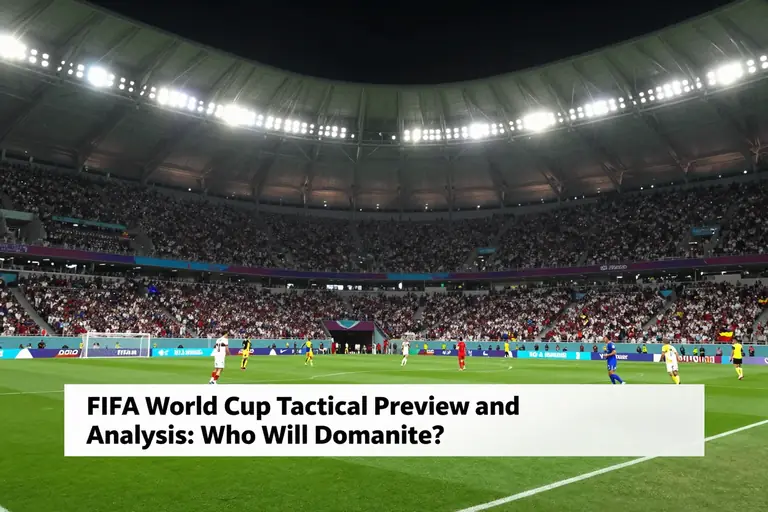
FIFA World Cup Tactical Preview and Analysis: A Comprehensive Look at Strategy and Key Matchups
The FIFA World Cup transcends the realm of a mere sporting event; it serves as a global stage where tactical masterminds showcase their innovations, diverse footballing philosophies collide, and lasting legacies are forged. As excitement builds for the upcoming tournament, a detailed FIFA World Cup tactical preview and analysis becomes essential for understanding the intricate nuances of the game and predicting potential champions. This article dives deep into the strategies, key players, evolving trends, and crucial mental aspects that will shape the competition. A proper FIFA World Cup tactical preview can make all the difference.
Decoding Modern Football Tactics
Modern football has evolved into a complex and multifaceted game, a significant departure from the simpler strategies of the past. Teams now utilize sophisticated systems that prioritize pressing, positional play, rapid transitions, and well-executed set-piece routines. A fundamental component of any insightful FIFA World Cup tactical preview lies in understanding these core concepts. For example, high pressing, made popular by influential coaches like Jürgen Klopp, involves aggressively winning back possession deep in the opponent’s territory, disrupting their build-up play and creating scoring opportunities. Positional play, championed by Pep Guardiola, emphasizes maintaining possession, carefully structuring formations, and exploiting space through intricate passing sequences, aiming to control the tempo and dictate the flow of the game. Understanding a FIFA World Cup tactical preview will also help fans appreciate the game more.
These complex tactical approaches require players with exceptional technical skills, acute tactical awareness, unwavering physical endurance, and the mental strength to perform under pressure. The FIFA World Cup provides an unparalleled global platform to witness these skills in action, as players from diverse backgrounds and playing styles come together to compete for the ultimate prize. All part of a good FIFA World Cup tactical preview.
Key Tactical Trends to Watch
Several key tactical trends are expected to dominate the upcoming FIFA World Cup. These include:
- The resurgence of the back three/five: An increasing number of teams are adopting a three-man (or five, including wing-backs) defensive structure, enhancing defensive solidity, providing greater coverage against potent attacking threats, and allowing wing-backs to move forward and contribute to attacking plays. This system offers flexibility in transitioning between defense and attack. A FIFA World Cup tactical preview would not be complete without mentioning this.
- The paramount importance of versatile midfielders: Midfielders who seamlessly combine defensive resilience with attacking flair are becoming increasingly indispensable, dictating the tempo of the game, orchestrating attacks, providing crucial support in both defensive and offensive phases, and contributing to transitions. Their ability to read the game and make incisive passes is vital. This is a key component of a FIFA World Cup tactical preview.
- The rise of inverted wingers: Wingers who strategically cut inside onto their stronger foot, unleashing shots on goal, unlocking opposition defenses with penetrating passes, and creating overloads in central areas, are gaining prominence. This tactic adds unpredictability to attacking plays and challenges traditional defensive setups. A FIFA World Cup tactical preview must include this.
- The increasing reliance on set-piece specialization: With games often decided by narrow margins, set-piece routines are receiving increased attention. Teams are employing specialized coaches and intricate routines to maximize their effectiveness from free kicks, corners, and throw-ins, both offensively and defensively. Don’t underestimate this in a FIFA World Cup tactical preview.
- The evolution of pressing strategies: High pressing remains a prominent tactic, but teams are also adopting more nuanced pressing schemes, tailoring their approach based on the opponent’s strengths and weaknesses. This involves strategically choosing when and where to press, conserving energy, and preventing opponents from playing through the press. A good FIFA World Cup tactical preview will analyze this.
A comprehensive FIFA World Cup tactical preview must carefully consider these evolving trends and analyze how different teams adapt to them, innovate upon them, and counter them. Understanding these tactical nuances is crucial for appreciating the strategic battles that unfold on the pitch. This is vital for any FIFA World Cup tactical preview.
Analyzing the Contenders: Tactical Blueprints Unveiled
Let’s examine some of the leading contenders and their expected tactical approaches. This FIFA World Cup tactical preview will analyze top teams.
Brazil
Brazil, rich in footballing history and blessed with abundant talent, always attracts attention. Their tactical setup often revolves around a fluid and dynamic attacking system, fueled by the creativity of their forwards, the dynamism of their midfielders, and the overlapping runs of their full-backs. A discerning FIFA World Cup tactical preview for Brazil would highlight their ability to seamlessly adapt their formation based on the opponent, switching between a more conservative approach, prioritizing defensive stability, and an overtly attacking one, unleashing their full offensive arsenal. This FIFA World Cup tactical preview sees Brazil as a top contender.
France
The reigning champions, France, possess a formidable squad filled with talent in every position. Their tactical approach typically relies on a solid defensive foundation, anchored by experienced center-backs and disciplined midfielders, combined with lightning-fast counter-attacks, orchestrated by their pacey forwards, and the individual brilliance of their star players. A meticulous FIFA World Cup tactical preview of France needs to consider their ability to exert control in midfield, efficiently transition from defense to attack, and effectively manage games, dictating the tempo and stifling opposition attacks. France will be tough to beat, according to this FIFA World Cup tactical preview.
England
England has become a strong force in recent years, embracing a more progressive and possession-based style of play under their astute manager. Their tactical setup often embodies a balanced approach, seamlessly blending resolute defense with attacking flair, capitalizing on set-piece opportunities, and exploiting wide areas with pace and precision. A comprehensive FIFA World Cup tactical preview of England should scrutinize their set-piece prowess, their ability to unlock stubborn defenses, and their tactical flexibility to adapt to different opponents and game situations. This FIFA World Cup tactical preview highlights England’s improvement.
Argentina
Led by Lionel Messi, Argentina is a team driven by unwavering passion and a strong desire for victory. Their tactical approach often centers around maximizing the impact of their talismanic captain, providing him with the necessary support, tactical freedom, and creative outlets to showcase his magic. A thorough FIFA World Cup tactical preview for Argentina must consider how they will strike a delicate balance between their attacking ambitions, ensuring Messi is involved in key moments, and defensive solidity, protecting their backline and stifling opposition attacks. This FIFA World Cup tactical preview notes Argentina’s reliance on Messi.
The Critical Role of Key Players
Individual players often have the ability to change the game in crucial moments, transcending tactical systems with moments of brilliance. A FIFA World Cup tactical preview would be incomplete without identifying the key players who could significantly influence the tournament’s outcome. These players not only possess exceptional technical skills but also the tactical intelligence to make split-second decisions under immense pressure, the leadership qualities to inspire their teammates, and the mental strength to perform at their best when it matters most.
Consider players such as Kylian Mbappé (France), known for his blistering pace, clinical finishing, and ability to terrorize defenses; Kevin De Bruyne (Belgium), celebrated for his exceptional passing range, visionary playmaking, and ability to unlock defenses with pinpoint passes; and Harry Kane (England), a prolific goalscorer with exceptional link-up play, tactical awareness, and ability to create chances for himself and others. Their performances will be crucial to their respective teams’ aspirations. A good FIFA World Cup tactical preview will mention these players.
The Decisive Importance of Set Pieces
Set pieces, often underestimated, can be a decisive factor in closely contested matches, where clear-cut chances are rare. Teams that are well-organized, possess quality delivery from set-piece situations, and have players with aerial prowess can gain a significant advantage, unlocking stubborn defenses and capitalizing on opportunities to score crucial goals. A FIFA World Cup tactical preview should carefully analyze the set-piece routines of different teams, identifying potential threats, innovative strategies, and areas of weakness.
Free kicks, corners, and penalties can all provide excellent opportunities to score, particularly against defensively strong opponents. The ability to defend set pieces effectively is equally important, as conceding easy goals from these situations can be detrimental to a team’s chances, undermining their tactical plans and shattering their confidence. This FIFA World Cup tactical preview emphasizes set pieces.
Adapting to Various Opponents
The most successful teams are those that can adapt their tactics to the unique challenges presented by different opponents. A rigid, one-size-fits-all approach is unlikely to succeed in a tournament as diverse and unpredictable as the FIFA World Cup. Teams need the tactical flexibility to adjust their formation, pressing intensity, defensive line, and attacking strategies based on the strengths and weaknesses of their adversaries. A key to success according to this FIFA World Cup tactical preview.
For example, a team might adopt a more defensive posture against a strong attacking side, prioritizing counter-attacks, denying space in dangerous areas, and frustrating their opponent’s attacking efforts. Conversely, against a weaker opponent, they might embrace a more aggressive, attacking approach, seeking to dominate possession, create numerous scoring opportunities, and overwhelm their opponent with relentless pressure. This FIFA World Cup tactical preview stresses adaptability.
The Strategic Impact of Substitutions
Substitutions can significantly influence the course of a match, injecting fresh energy into a team, providing a different tactical approach, or exploiting a perceived weakness in the opposition’s setup. Coaches need a deep understanding of their squad’s strengths and weaknesses, a keen awareness of the game’s flow, and the foresight to make tactical adjustments based on the changing circumstances. This FIFA World Cup tactical preview highlights substitutions.
For instance, introducing a pacey winger to exploit a tiring defense, adding creativity to midfield with a technically gifted playmaker, or bringing on a defensive midfielder to strengthen the midfield and protect a narrow lead can be crucial decisions that significantly impact the final outcome. A FIFA World Cup tactical preview must consider these potential game-changing moments, analyzing the bench strength of different teams and the tactical options available to their managers. Smart subs are part of a successful FIFA World Cup tactical preview.
Emerging Trends and Tactical Innovations
The FIFA World Cup often serves as a breeding ground for emerging trends and tactical innovations, as coaches constantly experiment with new ideas and approaches, seeking to gain a competitive edge and revolutionize modern football. Keep an eye out for novel formations, innovative pressing schemes, intricate attacking patterns, and creative set-piece routines that could reshape the tactical landscape of the game. A FIFA World Cup tactical preview anticipates new trends.
One potential trend to watch is the increasing adoption of hybrid formations, where teams seamlessly transition between different shapes and structures depending on the phase of play, creating tactical fluidity and disrupting the opposition’s defensive organization. Another is the heightened emphasis on quick transitions, with teams seeking to exploit turnovers and launch rapid counter-attacks, capitalizing on moments of defensive vulnerability. New tactics are always part of any FIFA World Cup tactical preview.
Predicting the Tactical Landscape
Predicting the exact tactical landscape of the FIFA World Cup is inherently difficult, as teams are constantly evolving and adapting, refining their strategies, honing their skills, and seeking to outmaneuver their opponents. However, by carefully analyzing the key trends, examining the strengths and weaknesses of the leading contenders, and considering the potential impact of individual players, we can gain a deeper understanding of the tactical battles that will unfold on the world stage. This FIFA World Cup tactical preview aims to do just that.
The FIFA World Cup promises to be a captivating tournament, filled with tactical intrigue, moments of individual brilliance, and unexpected surprises. By exploring the FIFA World Cup tactical preview and analysis, we can appreciate the complexities of the modern game and gain a deeper understanding of the strategies that will ultimately determine the champion. This FIFA World Cup tactical preview hopes to inform.
Beyond the Field: The Mental Game
While tactical skill is undoubtedly important, the psychological aspect of the game cannot be ignored. The immense pressure of performing on the world’s biggest stage can be overwhelming, and teams need to develop the mental strength to handle adversity, maintain focus under pressure, and execute their game plan with unwavering conviction. A FIFA World Cup tactical preview, while mainly focused on on-field strategy, should acknowledge the significant influence of the psychological element. Teams that can remain calm, composed, resilient, and united are more likely to overcome the challenges of the tournament and emerge victorious. A complete FIFA World Cup tactical preview considers mentality.
Factors such as team cohesion, strong leadership, tournament experience, and the ability to manage pressure all play a vital role in determining a team’s mental strength. Teams with a strong sense of unity, a clear understanding of their roles, and a collective belief in their ability to succeed are better prepared to handle the psychological demands of the tournament. Team chemistry is key, according to this FIFA World Cup tactical preview.
FAQ
What is the importance of a FIFA World Cup tactical preview?
A FIFA World Cup tactical preview provides valuable insights into the strategies teams are likely to use, the roles of key players, and the potential outcomes of matches based on tactical matchups. It offers a deeper understanding of the tournament’s complexities, going beyond simply reporting the final score and delving into the underlying strategic battles. It’s a deep dive, according to this FIFA World Cup tactical preview.
What are some key tactical elements to watch for during the FIFA World Cup?
Pay close attention to the formations used by different teams, their pressing strategies, set-piece routines, and how they adapt their tactics to counter different opponents. Also, observe the impact of substitutions and how they change the game’s dynamics. Identifying these elements will enhance your viewing experience and deepen your appreciation of the tactical nuances at play. This FIFA World Cup tactical preview recommends watching formations.
How can a FIFA World Cup tactical preview help predict potential winners?
By carefully analyzing the strengths and weaknesses of different teams, their tactical approaches, and the performances of their key players, a FIFA World Cup tactical preview can offer informed predictions about potential winners. However, it’s important to remember that football is inherently unpredictable, and upsets can always happen, adding to the tournament’s excitement and drama. Tactical analysis provides a framework for understanding potential outcomes, but the unpredictable nature of the game ensures that surprises are always possible. Even the best FIFA World Cup tactical preview can’t predict everything.