
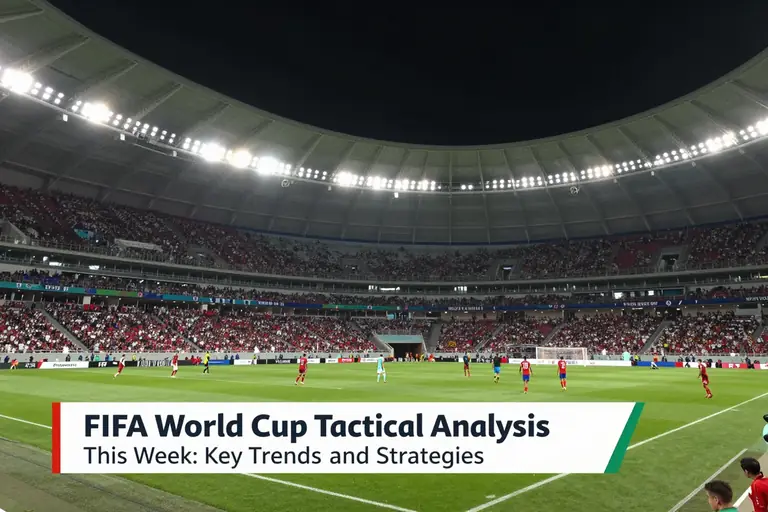
FIFA World Cup Tactical Analysis This Week: Deconstructing the Beautiful Game
The FIFA World Cup is more than just a sporting event; it’s a global convergence of cultures, a testament to human athleticism, and a fascinating showcase of tactical innovation. Each match is a chess game played out on a green field, where managers and players constantly adapt and react to their opponents’ strategies. This week’s tactical analysis of the FIFA World Cup will explore the key trends, formations, and in-game adjustments that have defined the tournament so far, providing insights into how teams are striving for victory.
The Tactical Landscape: A Symphony of Styles
The modern game is a melting pot of tactical approaches, and the World Cup serves as a prime example. We’ve seen teams embrace possession-based football, attempting to control the game through intricate passing and movement. Others have opted for a more direct, counter-attacking style, relying on speed and precision to exploit defensive vulnerabilities. The beauty of the tournament lies in the diversity of these approaches and the challenges they present to opposing teams.
Possession vs. Pragmatism: The Age-Old Debate
The debate between possession-based football and a more pragmatic, counter-attacking approach continues to rage. Teams like Spain, historically known for their tiki-taka style, aim to dominate possession and wear down their opponents through relentless passing. This approach requires exceptional technical skill, patience, and the ability to unlock tightly packed defenses.
Conversely, teams like Morocco have demonstrated the effectiveness of a well-organized defense and rapid counter-attacks. They concede possession willingly, focusing on denying space and hitting opponents quickly on the break. This strategy relies on defensive discipline, tactical awareness, and the ability to transition quickly from defense to attack.
Ultimately, the “best” approach depends on a team’s strengths, weaknesses, and the specific context of each match. A team with world-class midfielders may thrive on possession, while a team with pacey wingers and clinical finishers may find more success on the counter.
The Rise of the High Press: Winning the Ball High Up the Pitch
The high press has become an increasingly prevalent tactic in modern football, and the World Cup has been no exception. Teams employing this strategy aim to win the ball back in the opponent’s defensive third, forcing turnovers and creating scoring opportunities in dangerous areas.
A successful high press requires intense energy, coordinated movement, and unwavering commitment from all players. It involves pressing the opponent’s defenders and midfielders as they attempt to build from the back, forcing them into mistakes or long balls. When executed effectively, the high press can suffocate opponents and create a constant stream of attacking opportunities.
However, the high press also carries risks. If not executed properly, it can leave gaps in the defense and expose the team to counter-attacks. Teams employing this tactic must be well-drilled and possess the stamina to maintain the intensity throughout the match.
Set-Piece Mastery: Maximizing Opportunities from Dead-Ball Situations
Set-pieces often prove to be decisive moments in closely contested matches. Free kicks, corner kicks, and throw-ins can provide valuable scoring opportunities, especially against well-organized defenses. Teams are increasingly investing time and resources in developing sophisticated set-piece routines, both offensively and defensively.
Attacking set-pieces involve intricate choreography, designed to create space and confusion in the opponent’s penalty area. Decoy runs, blocking maneuvers, and precise deliveries are all key elements of a successful set-piece strategy. Defensively, teams employ zonal marking, man-marking, or a combination of both to prevent opponents from scoring.
Effective set-piece execution requires precision, timing, and a clear understanding of each player’s role. A well-executed set-piece can unlock a stubborn defense and provide a crucial advantage in a tight match.
Tactical Flexibility: Adapting to the Flow of the Game
In a demanding tournament like the World Cup, tactical flexibility is essential for sustained success. Teams must be able to adapt their formation, personnel, and game plan in response to the opponent’s strengths and weaknesses, as well as the evolving dynamics of the match.
Managers often make crucial substitutions to change the course of a game, introducing fresh legs, different skill sets, or a new tactical approach. Switching formations mid-match can also be an effective way to exploit vulnerabilities or stifle the opponent’s attack. The ability to react quickly and decisively to changing circumstances is a hallmark of successful teams.
Tactical flexibility requires a deep understanding of the game, a willingness to experiment, and the ability to communicate effectively with players. Teams that can adapt and adjust their approach are more likely to overcome challenges and achieve their goals.
Individual Player Roles: The Evolution of the Modern Footballer
While tactical formations and strategies are important, the individual performances of players ultimately determine the outcome of matches. Modern football has seen the evolution of specialized player roles, each requiring a unique set of skills and attributes.
The inverted winger, for example, has become a common sight in modern football. This player typically starts on the flank but cuts inside onto their stronger foot, creating scoring opportunities or delivering incisive passes. The defensive midfielder has also evolved into a key playmaker, dictating the tempo of the game from deep-lying positions and initiating attacks with precise distribution.
Understanding these individual player roles is crucial for appreciating the nuances of modern football and recognizing how players contribute to the overall tactical framework.
The Managerial Masterclass: Guiding the Team from the Sidelines
The decisions made by the coaches on the sidelines can have a profound impact on the outcome of matches. From selecting the starting lineup to making tactical adjustments during the game, the manager’s influence is undeniable.
An effective coach can inspire their players to perform at their peak, motivate them to overcome adversity, and make the right decisions at crucial junctures in the game. They can also identify vulnerabilities in the opposition’s formation or strategy and exploit them effectively through tactical tweaks and personnel changes.
The most successful coaches are not merely tacticians; they are also adept leaders, skilled psychologists, and effective communicators who can inspire and motivate their teams.
Emerging Trends: What to Watch for in the Latter Stages
As the World Cup progresses, expect to see further experimentation with unconventional formations, an increased emphasis on pressing and counter-pressing strategies, and a greater reliance on meticulously planned set-piece routines.
Pay close attention to how teams are utilizing their full-backs to provide width and support in attack, how they are managing the midfield battle to gain control of the game’s tempo, and how they are exploiting the space behind the opposition’s defensive line with well-timed runs and incisive passes. These are all critical areas that are likely to determine the outcome of future matches.
The beautiful game is constantly evolving, and the World Cup serves as a perfect platform to witness these changes unfold in real-time.
The Filipino Perspective: Passion and Support for the World Stage
While the Philippines may not be participating in the World Cup, the passion for football is growing rapidly in the country. Filipino fans avidly follow the tournament, supporting their favorite teams and players and engaging in lively discussions about tactics and strategies. The World Cup provides inspiration for young Filipino footballers and helps to promote the growth of the sport in the Philippines.
Stay updated with all the happenings by checking the Latest FIFA World Cup News Today.
Conclusion: A Tactical Masterpiece Unfolds
This week’s tactical analysis of the FIFA World Cup reveals a vibrant showcase of diverse playing styles, intricate strategic approaches, and the ever-evolving nature of modern football. Understanding these tactical nuances enhances the viewing experience and provides a deeper appreciation for the complexities of the game. The FIFA World Cup continues to deliver enthralling matches and tactical surprises, solidifying its status as a truly unforgettable global spectacle.
FAQ
What is tactical analysis in football?
Tactical analysis in football involves examining a team’s strategies, formations, player roles, and decisions during a match. It aims to understand how teams try to win by exploiting opponent weaknesses and maximizing their own strengths.
Why is tactical flexibility important in the FIFA World Cup?
Tactical flexibility is crucial in the FIFA World Cup because teams face diverse opponents with different strengths and weaknesses. Adapting formations, personnel, and game plans allows teams to respond effectively to changing match situations and gain a competitive edge.
How do set-piece strategies impact FIFA World Cup matches?
Set-piece strategies can be decisive in FIFA World Cup matches as they offer valuable scoring opportunities, especially in tight games. Teams invest in both attacking and defensive set-piece routines to increase their chances of scoring or preventing goals.
How has the role of the defensive midfielder evolved in modern football?
The defensive midfielder has evolved from a purely defensive role to a key playmaker, dictating the tempo of the game from deep-lying positions and initiating attacks with precise distribution. They are now expected to be both defensively solid and technically gifted.
What are some key coaching decisions that can influence a World Cup match?
Key coaching decisions include selecting the starting lineup, making tactical adjustments during the game, and motivating players. Coaches can also identify and exploit weaknesses in the opposition’s formation or strategy through tactical tweaks and personnel changes. Their ability to inspire and motivate their teams is also crucial.