
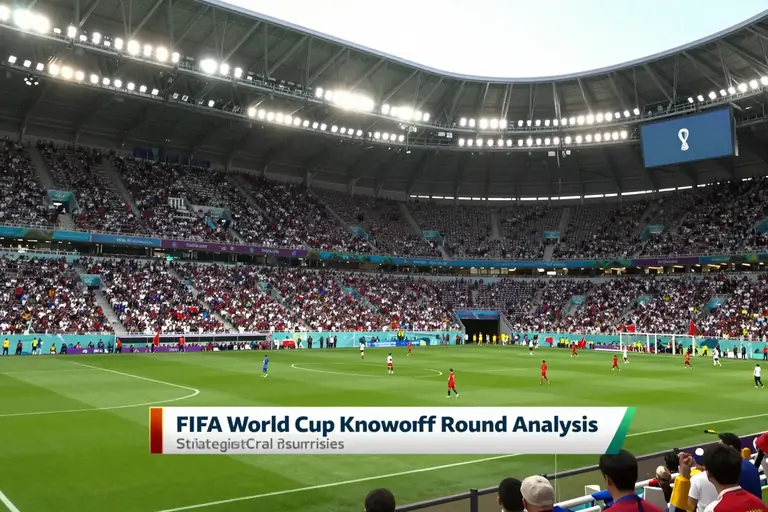
FIFA World Cup Knockout Round Analysis: Strategies, Surprises, and Historical Trends
The FIFA World Cup stands as the most prestigious tournament in international football, and the knockout round represents its most dramatic and decisive phase. This FIFA World Cup Knockout Round Analysis delves into the intricate tactical landscapes, unveils significant historical patterns, and highlights the unforgettable moments that define this high-stakes segment of the competition. From the intense battle for group stage qualification to the final, heart-stopping whistle, every match in the knockout round carries immense importance, demanding peak performance, strategic brilliance, and unwavering mental fortitude from every participating team.
Understanding the Structure of the Knockout Stage
The knockout stage commences immediately after the conclusion of the group stage. The top two teams from each of the eight groups earn their place in the knockout bracket, forming a field of 16 elite teams. From this point forward, the tournament adopts a single-elimination format: victory propels a team forward, while defeat signals the end of their World Cup journey. This win-or-go-home structure inherently generates an atmosphere of intense drama and nail-biting tension, as there are no second chances or opportunities for redemption. The knockout phase is comprised of the Round of 16, the Quarter-Finals, the Semi-Finals, and the coveted Final match. In addition to these rounds, a third-place play-off is held between the two losing semi-finalists, offering them a final opportunity to secure a podium finish.
The Round of 16: Navigating the Initial Obstacles
The Round of 16 often pits teams that emerged from stronger groups against those that qualified from potentially weaker groups, but the unpredictable nature of football means that upsets are always a distinct possibility. Teams that secured the top spot in their respective groups are seeded and are drawn to face the runner-up from another group. This stage is critically important for setting the overall tone and momentum for the remainder of the tournament. Demonstrating a strong and convincing performance in the Round of 16 can provide a significant boost in confidence and a palpable sense of momentum heading into the later, more challenging rounds. A thorough analysis of past World Cup tournaments reveals that the Round of 16 has consistently delivered a wealth of memorable moments, unexpected twists, and surprising results that have captivated audiences worldwide.
Quarter-Finals: The Emergence of the Elite Eight
The Quarter-Finals represent the point in the tournament where the genuine contenders for the World Cup title begin to truly distinguish themselves from the rest of the field. These matches are typically characterized by a heightened level of intensity, increased tactical awareness, and a greater emphasis on defensive solidity. Teams understand the immense pressure associated with this stage, knowing that a coveted place in the semi-finals is now within tantalizing reach. The Quarter-Finals often highlight the critical importance of possessing significant squad depth, as injuries, suspensions, and player fatigue can have a substantial impact on a team’s overall chances of success. A deep and comprehensive examination of previous Quarter-Finals reveals that tactical flexibility, clinical finishing in front of goal, and the ability to effectively manage pressure are key determinants of success at this crucial stage.
Semi-Finals: On the Very Brink of Glory
Reaching the Semi-Finals of the FIFA World Cup is an extraordinary achievement in itself, representing the culmination of years of dedication, sacrifice, and unwavering commitment. However, for the teams that reach this stage, the ultimate goal is undoubtedly to secure a place in the final and compete for the most prestigious prize in football. These matches are often characterized by intense pressure, strategic gameplay, and an acute awareness of the magnitude of the occasion. Teams are typically evenly matched at this stage, making individual brilliance, tactical innovations, and the ability to seize crucial moments the deciding factors. The emotional toll of the tournament also becomes increasingly evident, with player fatigue, mental resilience, and the ability to manage nerves becoming paramount considerations. The Semi-Finals have consistently produced some of the most iconic and unforgettable moments in World Cup history, featuring dramatic finishes, heroic performances, and displays of extraordinary skill that have resonated with fans across the globe.
The Final: The Ultimate Prize Awaits
The World Cup Final represents the culmination of years, and in some cases, decades, of relentless hard work, unwavering dedication, and unwavering pursuit of excellence. It is the ultimate test of skill, strategy, mental fortitude, and the ability to perform under immense pressure. The atmosphere surrounding the final is electric, with the eyes of the entire world focused on the two teams vying for glory. Winning the World Cup is widely considered the pinnacle of a footballer’s career, and the pressure on the players is immense, as they carry the hopes and dreams of their nation on their shoulders. This FIFA World Cup Knockout Round Analysis emphasizes that teams that can maintain composure, execute their game plan effectively, and seize their opportunities are the most likely to succeed in this high-stakes environment. The Final is the stage where legends are made, unforgettable memories are etched into history, and the ultimate dream of lifting the World Cup trophy is realized.
Key Tactical Approaches and Strategies in the Knockout Stage
Tactical flexibility is of paramount importance in the knockout stage of the World Cup. Teams often make subtle and significant adjustments to their formations, strategies, and overall approach based on a thorough assessment of their opponents’ strengths, weaknesses, and playing style. A proactive approach, characterized by aiming to control possession, dictate the tempo of the match, and create attacking opportunities, can be highly effective for teams with a strong midfield and creative forwards. Conversely, a counter-attacking strategy, which focuses on exploiting the opponent’s defensive vulnerabilities and launching quick, incisive attacks, can also yield significant results, particularly against teams that tend to overcommit in attack. The ability to adapt to changing circumstances, react effectively to in-game situations, and make timely tactical adjustments is crucial for navigating the complexities of the knockout stage. A strong and well-organized defense is often the foundation for success, as conceding goals can prove fatal in a single-elimination format. Set-piece proficiency, both in attack and defense, is also vitally important, as many knockout matches are decided by narrow margins or moments of individual brilliance from dead-ball situations.
Many teams adopt a more conservative and pragmatic approach in the knockout rounds, prioritizing defensive stability, minimizing risks, and focusing on preventing the opposition from scoring. This often leads to tighter, more tactical matches with fewer goals, as both teams are reluctant to concede an early advantage. However, some teams maintain an attacking philosophy, believing that the best form of defense is a well-executed offense. Ultimately, the most effective tactical approach depends on a complex interplay of factors, including the team’s inherent strengths and weaknesses, the specific characteristics of their opponents, and the prevailing circumstances of each individual match. The importance of having a well-defined game plan, the ability to execute it effectively under pressure, and the flexibility to adapt when necessary cannot be overstated.
Analyzing Historical Trends and Patterns in World Cup Knockout Rounds
Examining past World Cup tournaments reveals several interesting and recurring trends in the knockout rounds. Home advantage, while not always a guarantee of success, can play a significant role, as teams playing in front of their own passionate fans often receive a boost in confidence, motivation, and overall performance. However, the pressure of expectation can also be a burden, as teams may feel the weight of responsibility to deliver a positive result for their nation. The experience of playing in previous World Cups, particularly in the pressure-cooker environment of the knockout stage, can also be a valuable asset. Players who have navigated the challenges and intensity of previous tournaments are often better equipped to handle the stress, manage their emotions, and make sound decisions under pressure. This FIFA World Cup Knockout Round Analysis will delve into specific examples from past tournaments to illustrate these trends and patterns.
Historically, teams with strong defensive records, characterized by a well-organized backline and a disciplined approach to defending, have tended to perform well in the knockout rounds. A solid defense provides a stable platform for attacking players to express themselves freely without the constant fear of conceding easy goals. The ability to score from set-pieces, whether through well-rehearsed routines or moments of individual brilliance, has also been a key factor in determining the outcome of many knockout matches. Teams with creative midfielders, clinical finishers, and players who can deliver accurate crosses into the box are often more likely to progress through the knockout stages. The role of substitutions should not be underestimated, as fresh legs, tactical adjustments, and the introduction of game-changing players can have a significant impact on the overall outcome of a match. In past FIFA World Cup Knockout Round Analysis, managers who made timely and effective substitutions often saw their teams gain a crucial advantage and ultimately advance to the next round.
The Importance of Mental Strength, Leadership, and Team Cohesion
The knockout stage of the World Cup is as much a mental battle as it is a physical one. The pressure of playing in front of a global audience, with the stakes so incredibly high, can be overwhelming for even the most experienced players. Teams that can maintain composure, stay focused on their objectives, and effectively manage their emotions under pressure are more likely to succeed. Strong leadership, both on and off the field, is essential for guiding the team through difficult moments, instilling confidence, and fostering a sense of unity. Experienced players who have been through similar situations before can provide invaluable guidance, support, and mentorship to their younger teammates, helping them to navigate the challenges and overcome adversity. The ability to bounce back from setbacks, such as conceding a goal, missing a penalty, or facing a period of sustained pressure from the opposition, is also crucial for maintaining morale and staying competitive.
Mental resilience, characterized by the ability to stay positive, motivated, and focused even when things are not going according to plan, is a key attribute for any team hoping to progress deep into the World Cup. Teams that possess a strong team spirit, a belief in their own abilities, and a collective determination to succeed are more likely to overcome obstacles and achieve their goals. The role of the coach in instilling confidence, fostering a positive environment, and promoting a sense of camaraderie cannot be underestimated. A FIFA World Cup Knockout Round Analysis often highlights the significant impact of strong leadership, both on and off the field, on a team’s overall performance and ability to perform under pressure.
Potential Upsets, Surprises, and Unexpected Twists of Fate
The World Cup is renowned for its upsets, surprises, and unexpected twists of fate, and the knockout stage is often the setting for many of these dramatic moments. Underdog teams, often underestimated and overlooked, can rise to the occasion, fueled by passion, determination, and an unwavering desire to prove themselves against more established opponents. Tactical innovations, unexpected performances from individual players, and a willingness to take risks can also contribute to upsets, as teams catch their opponents off guard with unconventional strategies and surprising levels of intensity. Sometimes, the pressure of expectation can weigh heavily on the favorites, creating opportunities for underdogs to exploit their vulnerabilities and capitalize on their mistakes. A thorough FIFA World Cup Knockout Round Analysis always considers the potential for unexpected results, as the unpredictable nature of football means that anything is possible.
The element of surprise can be a powerful weapon in the knockout stage, as teams that are willing to take risks, deviate from their usual game plan, and embrace unconventional strategies can often catch their opponents off guard. The ability to adapt to different playing styles, adjust to changing tactical approaches, and effectively counter the opposition’s strengths is also crucial for dealing with potential upsets. Ultimately, the World Cup is a tournament where anything can happen, and the knockout stage is where dreams are realized, hopes are shattered, and lasting memories are created in equal measure. Each FIFA World Cup Knockout Round Analysis reveals new stories of triumph, heartbreak, and the unpredictable nature of football’s greatest spectacle.
The Impact of Individual Brilliance and Game-Changing Moments
While teamwork, tactical discipline, and a well-defined strategy are essential components of success in the knockout stage, individual brilliance can often be the deciding factor in closely contested matches. A moment of magic from a star player, such as a stunning goal, a brilliant assist, or a game-saving tackle, can change the course of a game in an instant and propel a team to victory. Players who can perform under pressure, rise to the occasion, and deliver in crucial moments are invaluable assets to their teams. The World Cup has seen countless examples of individual brilliance turning the tide of a match, and the knockout stage is where these moments are most likely to occur, as the stakes are at their highest and the pressure is at its most intense. A FIFA World Cup Knockout Round Analysis must acknowledge the significant role of star players and their ability to produce game-changing moments.
The ability to create something out of nothing, either through exceptional skill, individual flair, or sheer determination, is a rare and valuable skill in the knockout stage. Players who can dribble past defenders with ease, unleash powerful shots from distance, or deliver pinpoint crosses into the box can make all the difference in unlocking a stubborn defense and creating scoring opportunities. However, it is important to strike a balance between individual flair and team cohesion, as players who are too individualistic can disrupt the team’s harmony and undermine the overall strategy. Conversely, players who are too reliant on their teammates may lack the ability to make a decisive impact when their team needs them most. Finding the right balance between individual brilliance and collective effort is key to maximizing the impact of star players and enhancing the team’s overall chances of success.
Ultimately, the FIFA World Cup Knockout Round Analysis reveals a complex interplay of tactical approaches, historical trends, mental strength, leadership, team cohesion, and individual brilliance. The knockout stage is a crucible where the best teams in the world are tested to their limits, and only the strongest, most resilient, and most adaptable survive. The FIFA World Cup Knockout Round Analysis of past tournaments provides valuable insights into the factors that contribute to success, but each tournament is unique, and new legends are waiting to be born, new records are waiting to be broken, and new stories are waiting to be written.
FAQ
What is the most important factor for achieving success in the FIFA World Cup Knockout Round?
While a multitude of factors contribute to success, mental strength, tactical flexibility, and a well-balanced team are paramount. Teams must be able to handle immense pressure, adapt their strategies to counter different opponents, and capitalize on limited scoring opportunities with clinical precision. Strong leadership and a cohesive team spirit are also essential for navigating the challenges of the knockout stage.
How have tactical approaches and strategies evolved in recent World Cup Knockout Rounds?
In recent years, there has been a growing emphasis on defensive solidity, tactical discipline, and counter-attacking strategies. Teams often prioritize minimizing risks, maintaining a compact defensive shape, and exploiting opponents’ mistakes, leading to tighter, more tactical matches with fewer high-scoring affairs. The use of data analytics and advanced scouting techniques has also become increasingly prevalent, allowing teams to gain a deeper understanding of their opponents’ strengths and weaknesses.
Is it realistically possible for an underdog team to achieve victory in the FIFA World Cup Knockout Round?
Absolutely. The knockout stage is renowned for its upsets, and underdog teams often rise to the occasion due to a combination of factors, including tactical innovations, unexpected individual performances, and the favorites buckling under the pressure of expectation. A strong team spirit, unwavering belief in their abilities, and a bit of luck can also play a significant role in enabling underdog teams to defy the odds and achieve memorable victories.